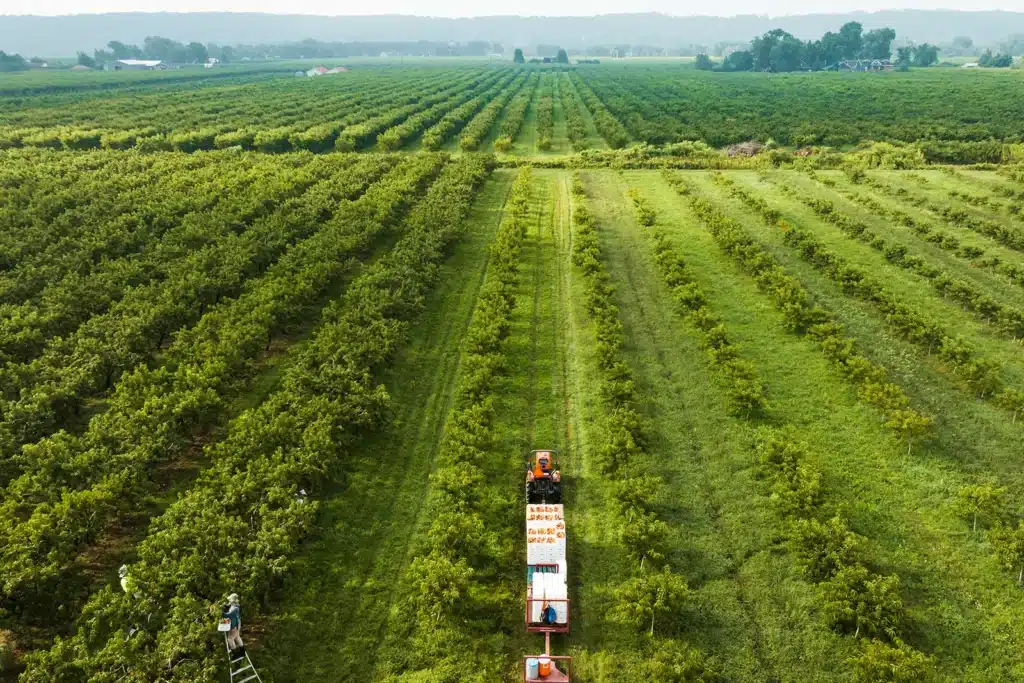
The Greenbelt Foundation, in partnership with the Soil Health Institute, has released a Regional Soil Health Report based on two years of on-farm data from 264 fields across the Greater Golden Horseshoe. This report presents clear soil health benchmarks across soil textures, helping farmers understand how healthy their soil is today, what’s possible, and the practical steps to improve them.
Farmers who adopted soil health practices had healthier soils across all measured indicators, including a 12% increase in water holding capacity, 28% increase in soil respiration, 39% increase in mineralizable nitrogen, and a 16% increase in aggregate stability.
Soil health means to me that we have resilient soil that can withstand some of the challengers year to year.
Gord Alblas, Farmer in Hamilton
This report provides regional soil health data, providing farmers with the ability to make data-driven soil management decisions that can improve soil health on their farms.
To develop these benchmarks, researchers measured key soil health indicators including organic carbon, respiration, and aggregate stability.
A companion peer-reviewed publication outlines the scientific methods behind the report and provides a deeper exploration of the findings. It details the methodology used to develop soil health benchmarks, how soil health indicators respond to different management practices, and estimates of maximum soil health potential in grain and oilseed production systems.

Soil Health Practices Yielding Results
Farmers are boosting soil health by adopting beneficials management practices such as cover crops, reduced tillage, and organic amendments. The Greenbelt Foundation’s Regional Soil Health Report shows that these practices improve soil stability, respiration, and carbon; especially when combined. See how everyday farming is building stronger, more resilient soils.
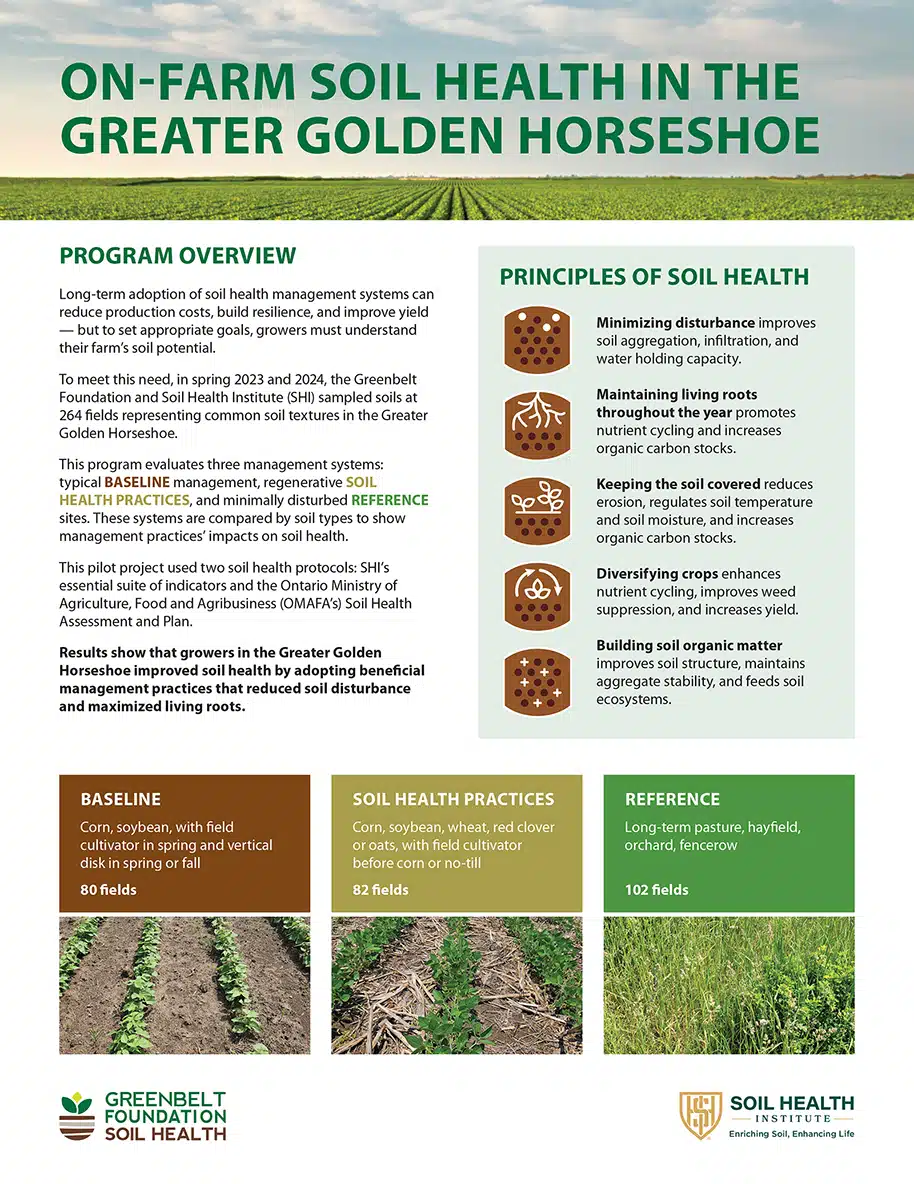
Report - On-Farm Soil Health in the Greater Golden Horseshoe
DownloadTechnical Report - Benchmarking Soil Health in Glaciated Soils Under Grain and Oilseed Production
DownloadYear Published: 2025
Report Status: Current
Published by: Greenbelt Foundation, Soil Health Institute
Authors: Greenbelt Foundation, Soil Health Institute
Focus Areas: Agriculture and Agri-Food,
Related Topics: Climate Resilience, Flood and Drought Risk Management, Soil Health