

Part of the Stories from the Greenbelt series
Every Acre Matters: Why Non-Farming Farmland Owners Have a Growing Role in Ontario’s Food Future
As Ontario’s population continues to grow, every acre of farmland is becoming increasingly critical for community-level and regional food resilience. The public is more interested than ever in knowing where their food comes from, and there is an increasing commitment to supporting local and Canadian products.
Over recent decades, significant shifts have taken place on the farming landscape in east Central Ontario. Large numbers of farmers in Ontario are near or reaching retirement age (Figure 1), with only 12.4% of farms in 2021 reporting having a succession plan in place. This can lead to a significant reduction of land in active production. When a farm family has no successor ready to take over, the land is sold, sometimes to another farmer, but increasingly to a non-farmer.
Figure 1. Proportion of Farm Operators by Age Category, Ontario, 2016 and 2021
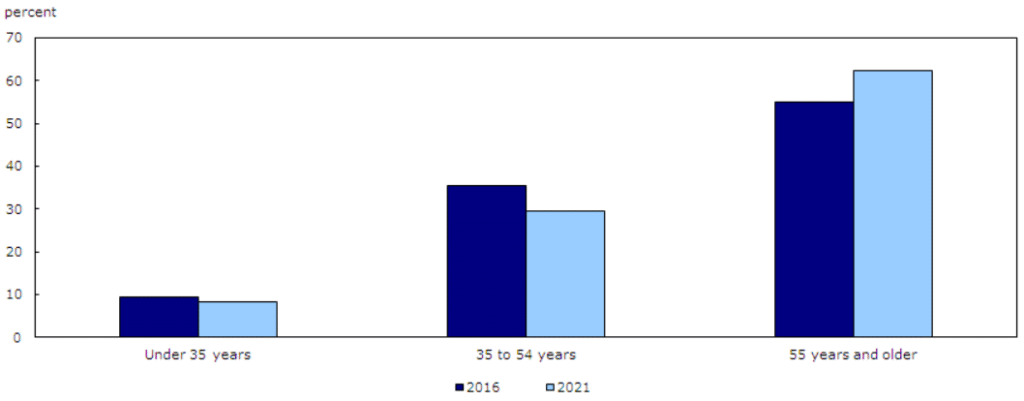
Data source: Statistics Canada, Census of Agriculture, 2016 and 2021 (3438)
Note: Totals may not equal 100% due to rounding.
At the same time, fewer new and young farmers are entering the agriculture sector: the number of farmers under the age of 35 has declined by 75% from 1991 – 2021 (Figure 2).
Figure 2. East Central Ontario Farmers under 35 Years of Age: 1991-2021

Together, these changes in farmland ownership patterns are affecting the region’s capacity to grow food into the future. Key trends from east Central Ontario highlight the scale of this transition: the number of farm businesses has declined by 38% in the past 30 years (Figure 3), farmland values have increased tremendously (Figure 4), and total farmland acreage has fallen by approximately 595,000 acres (Figure 5).
Figure 3. Total Farm Businesses East Central Ontario (1991-2021)

Figure 4. East Central Ontario: Dollars Per Acre in Farmland Values (1996-2002)

Figure 5. Total farm Businesses East Central Ontario (1991-2021)

For the past 15 years, Farms at Work has supported growth in the farming sector, working to help farmers to keep their land in well-stewarded production, and helping to strengthen local food systems in east central Ontario. During this time, they have collaborated with a wide range of partner organizations across the region to deliver programs that provide opportunities for learning and mentorship in agriculture, increase public understanding and appreciation of farming and food systems, protect ecosystem health, and facilitate access to farmland for farmers.
Observing changes in farmland ownership over recent decades, and conversations with many partner organizations about the significance of these trends, prompted Farms at Work, with the support of the Greenbelt Foundation, to launch an initiative focused on reaching non-farming owners of farmland and providing information and support about their farmland. The goal is straightforward: to help ensure farmland remains in active agricultural use while supporting farmland owners in navigating a wide range of land-related responsibilities and choices.
A central feature of this initiative is a day-long workshop designed specifically for new and non-farming owners of farmland. This is an opportunity to explore practical questions, responsibilities, and opportunities tied to farmland ownership, while also strengthening connections between landowners, farmers, and agricultural organizations.
Join Farms at Work on Friday, February 20, 2026, from 9:00 a.m. to 2:00 p.m. at the Cavan Monaghan Community Centre in Millbrook to better understand your options and opportunities for keeping your farmland in active, well-stewarded, agricultural use. Participation is also available online, bringing this important workshop to any new or non-farming landowners across east central Ontario or the Greenbelt who wish to learn about their place in the food and farming landscape.
Presentations from regional experts will cover farm business registration and property tax considerations; finding and maintaining clear communications with farm tenants; farm insurance and risk management; environmental stewardship practices to protect soil, water, and biodiversity; funding opportunities; and long-term options for protecting farm property. Together, these sessions are intended to build confidence, reduce risk, strengthen our rural communities, and support informed, long-term decision-making to build resilient landscapes on farms across the region.
For those participating in person, a light local lunch and refreshments will be provided.
Farmland Ownership: Opportunities, Connections and Answers
986 Peterborough County Rd 10, Millbrook, ON
Friday, February 20, 2026 9 am – 2pm
As farmland ownership continues to evolve across Ontario, the choices made today by landowners will shape whether these acres remain productive, protected, and connected to resilient local food systems for generations to come.